
10 Second Challenge: How Close Do People Really Get? Data From 19,788 Players

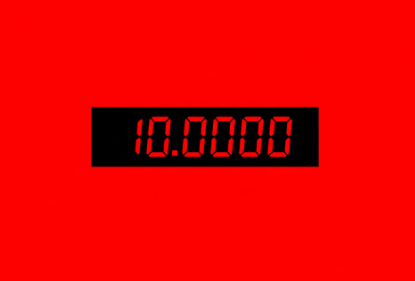
With the timer visible, the typical player's best attempt misses 10 seconds by just 32 milliseconds, and about 1% stop at exactly 10.0000. Hide the timer and the typical best miss grows to 254 milliseconds, about eight times worse.
These numbers come from the 10 Second Challenge on FreeFocusGames, where each player keeps their closest attempt.
Where the challenge comes from
The idea spread through short videos of restaurant and arcade stopwatch machines: press once to start, press again to stop as close to 10 seconds as you can, and win a prize or a free meal if you nail it. It looks trivial, which is exactly why it is so satisfying when you get close, and so frustrating when you don't.
How close do people get?
With the timer visible (standard mode), 19,788 players:
| Closest attempt within | Share of players |
|---|---|
| Exactly 10.0000 | About 1% |
| 0.01 s (10 ms) | 27% |
| 0.05 s (50 ms) | 61% |
| 0.10 s (100 ms) | 77% |
| 0.25 s (250 ms) | 92% |
| 0.50 s (500 ms) | 97% |
| Percentile | Best miss |
|---|---|
| Top 10% | 2 ms |
| Top 25% | 9 ms |
| Median | 32 ms |
| Bottom 25% | 92 ms |
| Bottom 10% | 203 ms |
So if your best is within 0.05 seconds, you are already better than most players. Within 0.01 seconds puts you in roughly the top quarter.
Hide the timer and it gets much harder
In hidden mode the numbers disappear once the timer starts, so you have to count on your own. 2,286 players:
| Closest attempt within | Standard mode | Hidden mode |
|---|---|---|
| 0.01 s | 27% | 5% |
| 0.05 s | 61% | 18% |
| 0.10 s | 77% | 28% |
| 0.25 s | 92% | 49% |
| 1.00 s | 99% | 87% |
The median best miss is 254 ms in hidden mode against 32 ms with the timer visible. Without the numbers to watch, you rely entirely on your internal sense of time, and small drifts add up over ten seconds.
Early or late?
Almost exactly half. In standard mode 46% of players' best attempts stopped early and 54% late; in hidden mode it was 50/50. There is no "safe side" to aim for.
Why it is so hard
- Reaction delay. If you wait to see 10.00 before pressing, your reaction time, typically a few hundred milliseconds online, makes you late. You have to press slightly before the number appears.
- Screen updates. A 60 Hz display shows a new frame every 16.7 ms, so you never actually see every millisecond tick by. Hitting 10.0000 is anticipation plus some luck.
- Rhythm drifts. Counting "one-Mississippi" feels steady, but speeding up or slowing down by a few percent over ten seconds already costs hundreds of milliseconds, as hidden mode shows.
Tips to get closer
- In standard mode, watch the last second closely and start pressing as 9.9 turns over.
- In hidden mode, count with a steady rhythm and press on the beat for ten.
- Use a mouse or keyboard if you can; taps on a phone often register later.
- Keep trying. Every result here is the player's best attempt, often after many tries.
How we calculated these numbers
- Data: each player's closest attempt in standard mode (March 27 to October 25, 2026) and hidden mode (September 9 to October 25, 2026).
- Exclusions: attempts more than 3 seconds away from 10 seconds, which usually mean the player got distracted. That left 19,788 players in standard mode and 2,286 in hidden mode.
- Limits: each player counts with their best attempt out of any number of tries, so these numbers show what people can reach with practice, not a typical single try.
For how we collect, filter, and cite all of our player data, see our data methodology.
FAQ
What is a good score in the 10 second challenge? Within 0.05 seconds beats most players with the timer visible. Within 0.01 seconds puts you in about the top quarter.
Can you really stop at exactly 10.0000? Yes, about 1% of players managed it in standard mode, usually after many attempts.
Is the 10 second challenge a reaction time test? Only partly. It is mostly about anticipation and time perception. For pure reaction speed, see what is a good reaction time.